
944 lines
30 KiB
Markdown
944 lines
30 KiB
Markdown
# bd - Beads Issue Tracker 🔗
|
|
|
|
**Give your coding agent a memory upgrade**
|
|
|
|
> **⚠️ Alpha Status**: This project is in active development. The core features work well, but expect API changes before 1.0. Use for development/internal projects first.
|
|
|
|
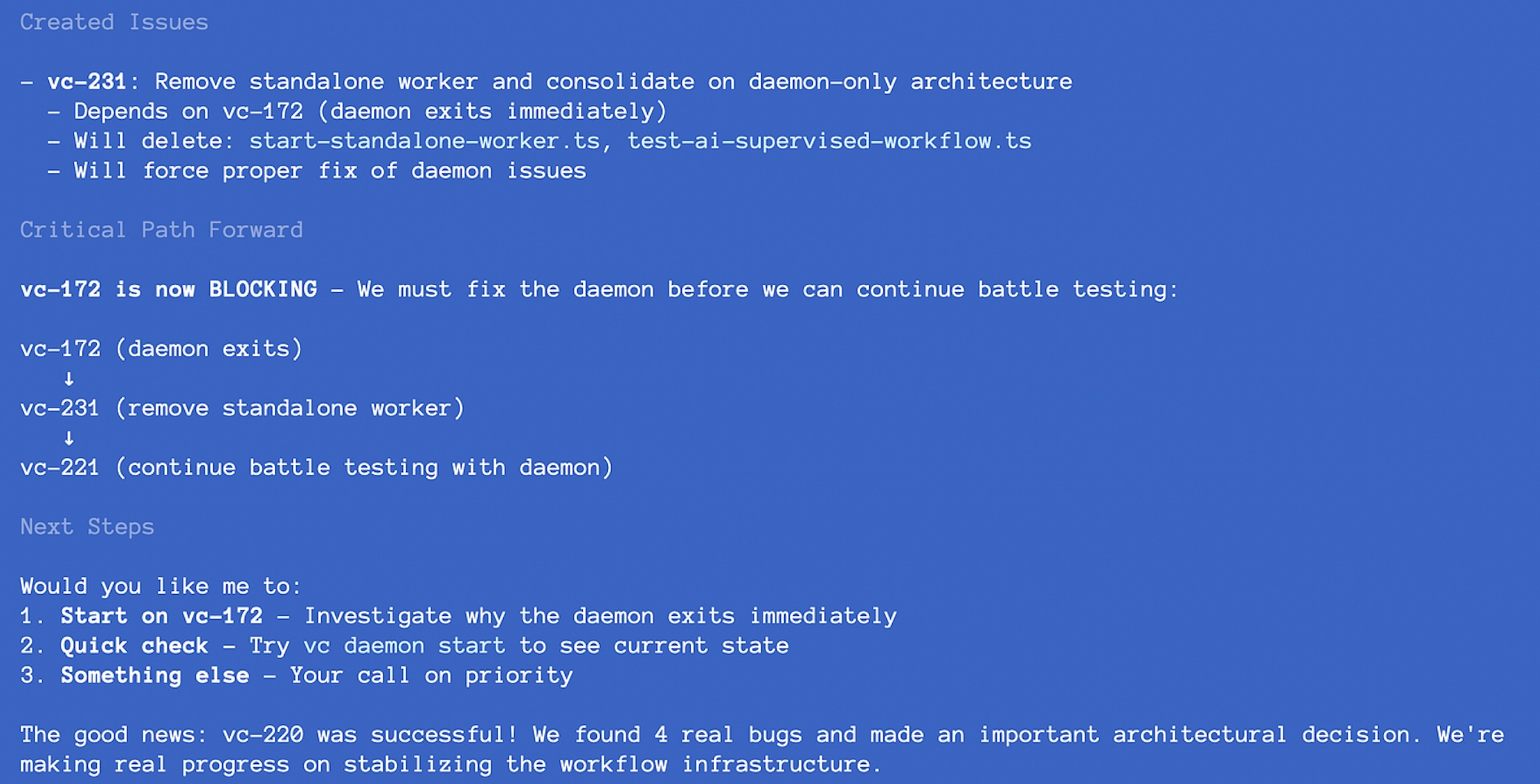
Beads is a lightweight memory system for coding agents, using a graph-based issue tracker. Four kinds of dependencies chain issues together like beads, making them easy for agents to follow for long distances.
|
|
|
|
Drop Beads into any project where you're using a coding agent, and you'll enjoy an instant upgrade in organization, focus, and your agent's ability to handle long-horizon tasks over multiple sessions. The agent will use issue tracking instead of creating a swamp of rotten half-implemented markdown plans.
|
|
|
|
Beads gives agents long-term planning, solving their amnesia getting lost in nested markdown plans. And they will no longer silently pass over issues due to lack of context space -- they will file issues for newly-discovered work as they go. No more lost work, ever.
|
|
|
|
Beads issues are backed by git, but through a clever design it manages to act like a managed, centrally hosted SQL database shared by all of the agents working on a project (repo), even across machines.
|
|
|
|
Agents report that they enjoy working with Beads, and they will use it spontaneously for both recording new work and reasoning about your project in novel ways. As a human, you'll have more fun and less stress with agentic coding.
|
|
|
|
## The Problem Beads Solves
|
|
|
|
You're 200 messages deep in a coding session with your AI agent. You've discovered 12 bugs, planned 8 features, debated 3 architectural changes. The agent asks: **"What should I work on next?"**
|
|
|
|
You scroll up. Your `TODO.md` has 47 unchecked boxes. Half are blocked by other tasks. Some are duplicates. You have no idea what's actually ready to work on.
|
|
|
|
**The agent has forgotten. You've lost track. Work is being duplicated.**
|
|
|
|
This is the reality of AI-assisted development:
|
|
- **Agents hit context limits** - Long conversations lose early tasks
|
|
- **TODOs don't track dependencies** - No way to know what's blocked
|
|
- **Markdown doesn't scale** - Finding ready work means manual scanning
|
|
- **No shared state** - Agent on your laptop, agent on your desktop, both out of sync
|
|
|
|
**Agents need external memory. You need dependency tracking. Both of you need to know what's ready to work on.**
|
|
|
|
|
|
|
|
## Features
|
|
|
|
- ✨ **Zero setup** - `bd init` creates project-local database
|
|
- 🔗 **Dependency tracking** - Four dependency types (blocks, related, parent-child, discovered-from)
|
|
- 📋 **Ready work detection** - Automatically finds issues with no open blockers
|
|
- 🤖 **Agent-friendly** - `--json` flags for programmatic integration
|
|
- 📦 **Git-versioned** - JSONL records stored in git, synced across machines
|
|
- 🌍 **Distributed by design** - Agents on multiple machines share one logical database via git
|
|
- 🏗️ **Extensible** - Add your own tables to the SQLite database
|
|
- 🔍 **Multi-project isolation** - Each project gets its own database, auto-discovered by directory
|
|
- 🌲 **Dependency trees** - Visualize full dependency graphs
|
|
- 🎨 **Beautiful CLI** - Colored output for humans, JSON for bots
|
|
- 💾 **Full audit trail** - Every change is logged
|
|
|
|
## Installation
|
|
|
|
### Quick Install (Recommended)
|
|
|
|
```bash
|
|
curl -fsSL https://raw.githubusercontent.com/steveyegge/beads/main/install.sh | bash
|
|
```
|
|
|
|
The installer will:
|
|
- Detect your platform (macOS/Linux, amd64/arm64)
|
|
- Install via `go install` if Go is available
|
|
- Fall back to building from source if needed
|
|
- Guide you through PATH setup if necessary
|
|
|
|
### Manual Install
|
|
|
|
```bash
|
|
# Using go install (requires Go 1.21+)
|
|
go install github.com/steveyegge/beads/cmd/bd@latest
|
|
|
|
# Or build from source
|
|
git clone https://github.com/steveyegge/beads
|
|
cd beads
|
|
go build -o bd ./cmd/bd
|
|
sudo mv bd /usr/local/bin/ # or anywhere in your PATH
|
|
```
|
|
|
|
## Quick Start
|
|
|
|
### For Humans
|
|
|
|
Beads is designed for **AI coding agents** to use on your behalf. As a human, you typically just:
|
|
|
|
```bash
|
|
# 1. Initialize beads in your project
|
|
bd init
|
|
|
|
# 2. Add a note to your agent instructions (CLAUDE.md, AGENTS.md, etc.)
|
|
echo "We track work in Beads instead of Markdown. Run \`bd quickstart\` to see how." >> CLAUDE.md
|
|
|
|
# 3. Let agents handle the rest!
|
|
```
|
|
|
|
Most tasks will be created and managed by agents during conversations. You can check on things with:
|
|
|
|
```bash
|
|
bd list # See what's being tracked
|
|
bd show <issue-id> # Review a specific issue
|
|
bd ready # See what's ready to work on
|
|
bd dep tree <issue-id> # Visualize dependencies
|
|
```
|
|
|
|
### For AI Agents
|
|
|
|
Run the interactive guide to learn the full workflow:
|
|
|
|
```bash
|
|
bd quickstart
|
|
```
|
|
|
|
Quick reference for agent workflows:
|
|
|
|
```bash
|
|
# Find ready work
|
|
bd ready --json | jq '.[0]'
|
|
|
|
# Create issues during work
|
|
bd create "Discovered bug" -t bug -p 0 --json
|
|
|
|
# Link discovered work back to parent
|
|
bd dep add <new-id> <parent-id> --type discovered-from
|
|
|
|
# Update status
|
|
bd update <issue-id> --status in_progress --json
|
|
|
|
# Complete work
|
|
bd close <issue-id> --reason "Implemented" --json
|
|
```
|
|
|
|
## The Magic: Distributed Database via Git
|
|
|
|
Here's the crazy part: **bd acts like a centralized database, but it's actually distributed via git.**
|
|
|
|
When you install bd on any machine with your project repo, you get:
|
|
- ✅ Full query capabilities (dependencies, ready work, etc.)
|
|
- ✅ Fast local operations (<100ms via SQLite)
|
|
- ✅ Shared state across all machines (via git)
|
|
- ✅ No server, no daemon, no configuration
|
|
- ✅ AI-assisted merge conflict resolution
|
|
|
|
**How it works:**
|
|
1. Each machine has a local SQLite cache (`.beads/*.db`) - gitignored
|
|
2. Source of truth is JSONL (`.beads/issues.jsonl`) - committed to git
|
|
3. `bd export` syncs SQLite → JSONL before commits
|
|
4. `bd import` syncs JSONL → SQLite after pulls
|
|
5. Git handles distribution; AI handles merge conflicts
|
|
|
|
**The result:** Agents on your laptop, your desktop, and your coworker's machine all query and update what *feels* like a single shared database, but it's really just git doing what git does best - syncing text files across machines.
|
|
|
|
No PostgreSQL instance. No MySQL server. No hosted service. Just install bd, clone the repo, and you're connected to the "database."
|
|
|
|
## Usage
|
|
|
|
### Creating Issues
|
|
|
|
```bash
|
|
bd create "Fix bug" -d "Description" -p 1 -t bug
|
|
bd create "Add feature" --description "Long description" --priority 2 --type feature
|
|
bd create "Task" -l "backend,urgent" --assignee alice
|
|
|
|
# Get JSON output for programmatic use
|
|
bd create "Fix bug" -d "Description" --json
|
|
```
|
|
|
|
Options:
|
|
- `-d, --description` - Issue description
|
|
- `-p, --priority` - Priority (0-4, 0=highest)
|
|
- `-t, --type` - Type (bug|feature|task|epic|chore)
|
|
- `-a, --assignee` - Assign to user
|
|
- `-l, --labels` - Comma-separated labels
|
|
- `--json` - Output in JSON format
|
|
|
|
### Viewing Issues
|
|
|
|
```bash
|
|
bd show bd-1 # Show full details
|
|
bd list # List all issues
|
|
bd list --status open # Filter by status
|
|
bd list --priority 1 # Filter by priority
|
|
bd list --assignee alice # Filter by assignee
|
|
|
|
# JSON output for agents
|
|
bd list --json
|
|
bd show bd-1 --json
|
|
```
|
|
|
|
### Updating Issues
|
|
|
|
```bash
|
|
bd update bd-1 --status in_progress
|
|
bd update bd-1 --priority 2
|
|
bd update bd-1 --assignee bob
|
|
bd close bd-1 --reason "Completed"
|
|
bd close bd-1 bd-2 bd-3 # Close multiple
|
|
|
|
# JSON output
|
|
bd update bd-1 --status in_progress --json
|
|
bd close bd-1 --json
|
|
```
|
|
|
|
### Dependencies
|
|
|
|
```bash
|
|
# Add dependency (bd-2 depends on bd-1)
|
|
bd dep add bd-2 bd-1
|
|
bd dep add bd-3 bd-1 --type blocks
|
|
|
|
# Remove dependency
|
|
bd dep remove bd-2 bd-1
|
|
|
|
# Show dependency tree
|
|
bd dep tree bd-2
|
|
|
|
# Detect cycles
|
|
bd dep cycles
|
|
```
|
|
|
|
### Finding Work
|
|
|
|
```bash
|
|
# Show ready work (no blockers)
|
|
bd ready
|
|
bd ready --limit 20
|
|
bd ready --priority 1
|
|
bd ready --assignee alice
|
|
|
|
# Show blocked issues
|
|
bd blocked
|
|
|
|
# Statistics
|
|
bd stats
|
|
|
|
# JSON output for agents
|
|
bd ready --json
|
|
```
|
|
|
|
## Database Discovery
|
|
|
|
bd automatically discovers your database in this order:
|
|
|
|
1. `--db` flag: `bd --db /path/to/db.db create "Issue"`
|
|
2. `$BEADS_DB` environment variable: `export BEADS_DB=/path/to/db.db`
|
|
3. `.beads/*.db` in current directory or ancestors (walks up like git)
|
|
4. `~/.beads/default.db` as fallback
|
|
|
|
This means you can:
|
|
- Initialize per-project databases with `bd init`
|
|
- Work from any subdirectory (bd finds the database automatically)
|
|
- Override for testing or multiple projects
|
|
|
|
Example:
|
|
|
|
```bash
|
|
# Initialize in project root
|
|
cd ~/myproject
|
|
bd init --prefix myapp
|
|
|
|
# Work from any subdirectory
|
|
cd ~/myproject/src/components
|
|
bd create "Fix navbar bug" # Uses ~/myproject/.beads/myapp.db
|
|
|
|
# Override for a different project
|
|
bd --db ~/otherproject/.beads/other.db list
|
|
```
|
|
|
|
## Dependency Model
|
|
|
|
Beads has four types of dependencies:
|
|
|
|
1. **blocks** - Hard blocker (affects ready work calculation)
|
|
2. **related** - Soft relationship (just for context)
|
|
3. **parent-child** - Epic/subtask hierarchy
|
|
4. **discovered-from** - Tracks issues discovered while working on another issue
|
|
|
|
Only `blocks` dependencies affect the ready work queue.
|
|
|
|
### Dependency Type Usage
|
|
|
|
- **blocks**: Use when issue X cannot start until issue Y is completed
|
|
```bash
|
|
bd dep add bd-5 bd-3 --type blocks # bd-5 blocked by bd-3
|
|
```
|
|
|
|
- **related**: Use for issues that are connected but don't block each other
|
|
```bash
|
|
bd dep add bd-10 bd-8 --type related # bd-10 related to bd-8
|
|
```
|
|
|
|
- **parent-child**: Use for epic/subtask hierarchies
|
|
```bash
|
|
bd dep add bd-15 bd-12 --type parent-child # bd-15 is child of epic bd-12
|
|
```
|
|
|
|
- **discovered-from**: Use when you discover new work while working on an issue
|
|
```bash
|
|
# While working on bd-20, you discover a bug
|
|
bd create "Fix edge case bug" -t bug -p 1
|
|
bd dep add bd-21 bd-20 --type discovered-from # bd-21 discovered from bd-20
|
|
```
|
|
|
|
The `discovered-from` type is particularly useful for AI-supervised workflows, where the AI can automatically create issues for discovered work and link them back to the parent task.
|
|
|
|
## AI Agent Integration
|
|
|
|
bd is designed to work seamlessly with AI coding agents:
|
|
|
|
```bash
|
|
# Agent discovers ready work
|
|
WORK=$(bd ready --limit 1 --json)
|
|
ISSUE_ID=$(echo $WORK | jq -r '.[0].id')
|
|
|
|
# Agent claims and starts work
|
|
bd update $ISSUE_ID --status in_progress --json
|
|
|
|
# Agent discovers new work while executing
|
|
bd create "Fix bug found in testing" -t bug -p 0 --json > new_issue.json
|
|
NEW_ID=$(cat new_issue.json | jq -r '.id')
|
|
bd dep add $NEW_ID $ISSUE_ID --type discovered-from
|
|
|
|
# Agent completes work
|
|
bd close $ISSUE_ID --reason "Implemented and tested" --json
|
|
```
|
|
|
|
The `--json` flag on every command makes bd perfect for programmatic workflows.
|
|
|
|
## Ready Work Algorithm
|
|
|
|
An issue is "ready" if:
|
|
- Status is `open`
|
|
- It has NO open `blocks` dependencies
|
|
- All blockers are either closed or non-existent
|
|
|
|
Example:
|
|
```
|
|
bd-1 [open] ← blocks ← bd-2 [open] ← blocks ← bd-3 [open]
|
|
```
|
|
|
|
Ready work: `[bd-1]`
|
|
Blocked: `[bd-2, bd-3]`
|
|
|
|
## Issue Lifecycle
|
|
|
|
```
|
|
open → in_progress → closed
|
|
↓
|
|
blocked (manually set, or has open blockers)
|
|
```
|
|
|
|
## Architecture
|
|
|
|
```
|
|
beads/
|
|
├── cmd/bd/ # CLI entry point
|
|
│ ├── main.go # Core commands (create, list, show, update, close)
|
|
│ ├── init.go # Project initialization
|
|
│ ├── quickstart.go # Interactive guide
|
|
│ └── ...
|
|
├── internal/
|
|
│ ├── types/ # Core data types (Issue, Dependency, etc.)
|
|
│ └── storage/ # Storage interface
|
|
│ └── sqlite/ # SQLite implementation
|
|
└── EXTENDING.md # Database extension guide
|
|
```
|
|
|
|
## Extending bd
|
|
|
|
Applications can extend bd's SQLite database with their own tables. See [EXTENDING.md](EXTENDING.md) for the full guide.
|
|
|
|
Quick example:
|
|
|
|
```sql
|
|
-- Add your own tables to .beads/myapp.db
|
|
CREATE TABLE myapp_executions (
|
|
id INTEGER PRIMARY KEY,
|
|
issue_id TEXT NOT NULL,
|
|
status TEXT NOT NULL,
|
|
started_at DATETIME,
|
|
FOREIGN KEY (issue_id) REFERENCES issues(id)
|
|
);
|
|
|
|
-- Query across layers
|
|
SELECT i.*, e.status as execution_status
|
|
FROM issues i
|
|
LEFT JOIN myapp_executions e ON i.id = e.issue_id
|
|
WHERE i.status = 'in_progress';
|
|
```
|
|
|
|
This pattern enables powerful integrations while keeping bd simple and focused.
|
|
|
|
## Comparison to Other Tools
|
|
|
|
| Feature | bd | Taskwarrior | GitHub Issues | Jira | Linear |
|
|
|---------|-------|-------------|---------------|------|--------|
|
|
| Zero setup | ✅ | ✅ | ❌ | ❌ | ❌ |
|
|
| Dependency tracking | ✅ | ✅ | ⚠️ | ✅ | ✅ |
|
|
| Ready work detection | ✅ | ⚠️ | ❌ | ❌ | ❌ |
|
|
| Agent-friendly (JSON) | ✅ | ⚠️ | ⚠️ | ⚠️ | ⚠️ |
|
|
| Distributed via git | ✅ | ⚠️ | ❌ | ❌ | ❌ |
|
|
| Works offline | ✅ | ✅ | ❌ | ❌ | ❌ |
|
|
| AI-resolvable conflicts | ✅ | ❌ | ❌ | ❌ | ❌ |
|
|
| Extensible database | ✅ | ❌ | ❌ | ❌ | ❌ |
|
|
| No server required | ✅ | ✅ | ❌ | ❌ | ❌ |
|
|
| Built for AI agents | ✅ | ❌ | ❌ | ❌ | ❌ |
|
|
|
|
**vs. Taskwarrior**: Taskwarrior is great for personal task management, but bd is designed specifically for AI agents. bd has explicit dependency types (`discovered-from`), JSON-first API design, and JSONL storage optimized for git merging. Taskwarrior's sync server requires setup; bd uses git automatically.
|
|
|
|
## Why bd?
|
|
|
|
**bd is designed for AI coding agents, not humans.**
|
|
|
|
Traditional issue trackers (Jira, GitHub Issues, Linear) assume humans are the primary users. Humans click through web UIs, drag cards on boards, and manually update status.
|
|
|
|
bd assumes **AI agents are the primary users**, with humans supervising:
|
|
|
|
- **Agents discover work** - `bd ready --json` gives agents unblocked tasks to execute
|
|
- **Dependencies prevent wasted work** - Agents don't duplicate effort or work on blocked tasks
|
|
- **Discovery during execution** - Agents create issues for work they discover while executing, linked with `discovered-from`
|
|
- **Agents lose focus** - Long-running conversations can forget tasks; bd remembers everything
|
|
- **Humans supervise** - Check on progress with `bd list` and `bd dep tree`, but don't micromanage
|
|
|
|
In human-managed workflows, issues are planning artifacts. In agent-managed workflows, **issues are memory** - preventing agents from forgetting tasks during long coding sessions.
|
|
|
|
Traditional issue trackers were built for human project managers. bd is built for autonomous agents.
|
|
|
|
## Architecture: JSONL + SQLite
|
|
|
|
bd uses a dual-storage approach:
|
|
|
|
- **JSONL files** (`.beads/issues.jsonl`) - Source of truth, committed to git
|
|
- **SQLite database** (`.beads/*.db`) - Ephemeral cache for fast queries, gitignored
|
|
|
|
This gives you:
|
|
- ✅ **Git-friendly storage** - Text diffs, AI-resolvable conflicts
|
|
- ✅ **Fast queries** - SQLite indexes for dependency graphs
|
|
- ✅ **Simple workflow** - Export before commit, import after pull
|
|
- ✅ **No daemon required** - In-process SQLite, ~10-100ms per command
|
|
|
|
When you run `bd create`, it writes to SQLite. Before committing to git, run `bd export` to sync to JSONL. After pulling, run `bd import` to sync back to SQLite. Git hooks can automate this.
|
|
|
|
## Export/Import (JSONL Format)
|
|
|
|
bd can export and import issues as JSON Lines (one JSON object per line). This is perfect for git workflows and data portability.
|
|
|
|
### Export Issues
|
|
|
|
```bash
|
|
# Export all issues to stdout
|
|
bd export --format=jsonl
|
|
|
|
# Export to file
|
|
bd export --format=jsonl -o issues.jsonl
|
|
|
|
# Export filtered issues
|
|
bd export --format=jsonl --status=open -o open-issues.jsonl
|
|
```
|
|
|
|
Issues are exported sorted by ID for consistent git diffs.
|
|
|
|
### Import Issues
|
|
|
|
```bash
|
|
# Import from stdin
|
|
cat issues.jsonl | bd import
|
|
|
|
# Import from file
|
|
bd import -i issues.jsonl
|
|
|
|
# Skip existing issues (only create new ones)
|
|
bd import -i issues.jsonl --skip-existing
|
|
```
|
|
|
|
Import behavior:
|
|
- Existing issues (same ID) are **updated** with new values
|
|
- New issues are **created**
|
|
- All imports are atomic (all or nothing)
|
|
|
|
### Handling ID Collisions
|
|
|
|
When importing issues, bd detects three types of situations:
|
|
1. **Exact matches** - Same ID, same content (idempotent, no action needed)
|
|
2. **New issues** - ID doesn't exist in database yet
|
|
3. **Collisions** - Same ID but different content (requires resolution)
|
|
|
|
**Collision detection:**
|
|
```bash
|
|
# Preview collisions without making changes
|
|
bd import -i issues.jsonl --dry-run
|
|
|
|
# Output shows:
|
|
# === Collision Detection Report ===
|
|
# Exact matches (idempotent): 5
|
|
# New issues: 3
|
|
# COLLISIONS DETECTED: 2
|
|
#
|
|
# Colliding issues:
|
|
# bd-10: Fix authentication bug
|
|
# Conflicting fields: [title, priority, status]
|
|
# bd-15: Add dashboard widget
|
|
# Conflicting fields: [description, assignee]
|
|
```
|
|
|
|
**Resolution strategies:**
|
|
|
|
**Option 1: Automatic remapping (recommended for branch merges)**
|
|
```bash
|
|
# Automatically resolve collisions by renumbering incoming issues
|
|
bd import -i issues.jsonl --resolve-collisions
|
|
|
|
# bd will:
|
|
# 1. Keep existing issues unchanged
|
|
# 2. Assign new IDs to colliding incoming issues (bd-25, bd-26, etc.)
|
|
# 3. Update ALL text references and dependencies to use new IDs
|
|
# 4. Report the remapping:
|
|
#
|
|
# === Remapping Report ===
|
|
# Issues remapped: 2
|
|
#
|
|
# Remappings (sorted by reference count):
|
|
# bd-10 → bd-25 (refs: 3)
|
|
# bd-15 → bd-26 (refs: 7)
|
|
#
|
|
# All text and dependency references have been updated.
|
|
```
|
|
|
|
**Option 2: Manual resolution**
|
|
```bash
|
|
# 1. Check for collisions first
|
|
bd import -i branch-issues.jsonl --dry-run
|
|
|
|
# 2. Edit JSONL to resolve manually:
|
|
# - Rename IDs in the JSONL file
|
|
# - Or merge content into existing issues
|
|
# - Or skip colliding issues
|
|
|
|
# 3. Import after manual fixes
|
|
bd import -i branch-issues.jsonl
|
|
```
|
|
|
|
**The collision resolution algorithm:**
|
|
|
|
When using `--resolve-collisions`, bd intelligently remaps colliding issues to minimize updates:
|
|
|
|
1. **Detects collisions** - Compares ID and content (title, description, status, priority, etc.)
|
|
2. **Scores references** - Counts how many times each ID is referenced in:
|
|
- Text fields (description, design, notes, acceptance criteria)
|
|
- Dependency records (both as source and target)
|
|
3. **Renumbers by score** - Issues with fewer references are remapped first
|
|
4. **Updates all references** - Uses word-boundary regex to replace old IDs:
|
|
- Text fields: "See bd-10 for details" → "See bd-25 for details"
|
|
- Dependencies: bd-5 → bd-10 becomes bd-5 → bd-25
|
|
- Handles edge cases: Distinguishes bd-10 from bd-100, bd-1000, etc.
|
|
|
|
**Branch merge workflow:**
|
|
|
|
This is particularly useful when merging branches where both sides created issues with the same IDs:
|
|
|
|
```bash
|
|
# On main branch: bd-1 through bd-20 exist
|
|
git checkout main
|
|
bd export -o .beads/issues.jsonl
|
|
|
|
# On feature branch: Also has bd-1 through bd-20 (diverged)
|
|
git checkout feature-branch
|
|
bd export -o .beads/issues.jsonl
|
|
|
|
# Merge branches
|
|
git checkout main
|
|
git merge feature-branch
|
|
# Git shows conflict in .beads/issues.jsonl
|
|
|
|
# Resolve the conflict in Git (keep both sides for different issues, etc.)
|
|
# Then import with collision resolution:
|
|
bd import -i .beads/issues.jsonl --resolve-collisions
|
|
|
|
# Result: Issues from feature-branch get new IDs (bd-21+)
|
|
# All cross-references are automatically updated
|
|
```
|
|
|
|
**Important notes:**
|
|
- Collisions are **safe by default** - import fails unless you use `--resolve-collisions`
|
|
- Use `--dry-run` to preview changes before applying
|
|
- The algorithm preserves the existing database (existing issues are never renumbered)
|
|
- All text mentions and dependency links are updated automatically
|
|
- Word-boundary matching prevents false replacements (bd-10 won't match bd-100)
|
|
|
|
### JSONL Format
|
|
|
|
Each line is a complete JSON issue object:
|
|
|
|
```jsonl
|
|
{"id":"bd-1","title":"Fix login bug","status":"open","priority":1,"issue_type":"bug","created_at":"2025-10-12T10:00:00Z","updated_at":"2025-10-12T10:00:00Z"}
|
|
{"id":"bd-2","title":"Add dark mode","status":"in_progress","priority":2,"issue_type":"feature","created_at":"2025-10-12T11:00:00Z","updated_at":"2025-10-12T12:00:00Z"}
|
|
```
|
|
|
|
## Git Workflow
|
|
|
|
**Recommended approach**: Use JSONL export as source of truth, SQLite database as ephemeral cache (not committed to git).
|
|
|
|
### Setup
|
|
|
|
Add to `.gitignore`:
|
|
```
|
|
.beads/*.db
|
|
.beads/*.db-*
|
|
```
|
|
|
|
Add to git:
|
|
```
|
|
.beads/issues.jsonl
|
|
```
|
|
|
|
### Workflow
|
|
|
|
```bash
|
|
# Export before committing
|
|
bd export -o .beads/issues.jsonl
|
|
git add .beads/issues.jsonl
|
|
git commit -m "Update issues"
|
|
git push
|
|
|
|
# Import after pulling
|
|
git pull
|
|
bd import -i .beads/issues.jsonl
|
|
```
|
|
|
|
### Automated with Git Hooks
|
|
|
|
Create `.git/hooks/pre-commit`:
|
|
```bash
|
|
#!/bin/bash
|
|
bd export -o .beads/issues.jsonl
|
|
git add .beads/issues.jsonl
|
|
```
|
|
|
|
Create `.git/hooks/post-merge`:
|
|
```bash
|
|
#!/bin/bash
|
|
bd import -i .beads/issues.jsonl
|
|
```
|
|
|
|
Make hooks executable:
|
|
```bash
|
|
chmod +x .git/hooks/pre-commit .git/hooks/post-merge
|
|
```
|
|
|
|
### Why JSONL?
|
|
|
|
- ✅ **Git-friendly**: One line per issue = clean diffs
|
|
- ✅ **Mergeable**: Concurrent appends rarely conflict
|
|
- ✅ **Human-readable**: Easy to review changes
|
|
- ✅ **Scriptable**: Use `jq`, `grep`, or any text tools
|
|
- ✅ **Portable**: Export/import between databases
|
|
|
|
### Handling Conflicts
|
|
|
|
When two developers create new issues:
|
|
```diff
|
|
{"id":"bd-1","title":"First issue",...}
|
|
{"id":"bd-2","title":"Second issue",...}
|
|
+{"id":"bd-3","title":"From branch A",...}
|
|
+{"id":"bd-4","title":"From branch B",...}
|
|
```
|
|
|
|
Git may show a conflict, but resolution is simple: **keep both lines** (both changes are compatible).
|
|
|
|
See **[TEXT_FORMATS.md](TEXT_FORMATS.md)** for detailed analysis of JSONL merge strategies and conflict resolution.
|
|
|
|
## Examples
|
|
|
|
Check out the **[examples/](examples/)** directory for:
|
|
- **[Python agent](examples/python-agent/)** - Full agent implementation in Python
|
|
- **[Bash agent](examples/bash-agent/)** - Shell script agent example
|
|
- **[Git hooks](examples/git-hooks/)** - Automatic export/import on git operations
|
|
- **[Branch merge workflow](examples/branch-merge/)** - Handle ID collisions when merging branches
|
|
- **[Claude Desktop MCP](examples/claude-desktop-mcp/)** - MCP server integration (coming soon)
|
|
|
|
## FAQ
|
|
|
|
### Why not just use GitHub Issues?
|
|
|
|
GitHub Issues requires internet, has API rate limits, and isn't designed for agents. bd works offline, has no limits, and gives you `bd ready --json` to instantly find unblocked work. Plus, bd's distributed database means agents on multiple machines share state via git—no API calls needed.
|
|
|
|
### How is this different from Taskwarrior?
|
|
|
|
Taskwarrior is excellent for personal task management, but bd is built for AI agents:
|
|
- **Explicit agent semantics**: `discovered-from` dependency type, `bd ready` for queue management
|
|
- **JSON-first design**: Every command has `--json` output
|
|
- **Git-native sync**: No sync server setup required
|
|
- **Merge-friendly JSONL**: One issue per line, AI-resolvable conflicts
|
|
- **Extensible SQLite**: Add your own tables without forking
|
|
|
|
### Can I use bd without AI agents?
|
|
|
|
Absolutely! bd is a great CLI issue tracker for humans too. The `bd ready` command is useful for anyone managing dependencies. Think of it as "Taskwarrior meets git."
|
|
|
|
### What happens if two agents work on the same issue?
|
|
|
|
The last agent to export/commit wins. This is the same as any git-based workflow. To prevent conflicts:
|
|
- Have agents claim work with `bd update <id> --status in_progress`
|
|
- Query by assignee: `bd ready --assignee agent-name`
|
|
- Review git diffs before merging
|
|
|
|
For true multi-agent coordination, you'd need additional tooling (like locks or a coordination server). bd handles the simpler case: multiple humans/agents working on different tasks, syncing via git.
|
|
|
|
### Do I need to run export/import manually?
|
|
|
|
No! Install the git hooks from [examples/git-hooks/](examples/git-hooks/):
|
|
```bash
|
|
cd examples/git-hooks && ./install.sh
|
|
```
|
|
|
|
The hooks automatically export before commits and import after pulls/merges/checkouts. Set it up once, forget about it.
|
|
|
|
### Can I track issues for multiple projects?
|
|
|
|
**Yes! Each project is completely isolated.** bd uses project-local databases:
|
|
```bash
|
|
cd ~/project1 && bd init --prefix proj1
|
|
cd ~/project2 && bd init --prefix proj2
|
|
```
|
|
|
|
Each project gets its own `.beads/` directory with its own database and JSONL file. bd auto-discovers the correct database based on your current directory (walks up like git).
|
|
|
|
**Multi-project scenarios work seamlessly:**
|
|
- Multiple agents working on different projects simultaneously → No conflicts
|
|
- Same machine, different repos → Each finds its own `.beads/*.db` automatically
|
|
- Agents in subdirectories → bd walks up to find the project root (like git)
|
|
|
|
**Limitation:** Issues cannot reference issues in other projects. Each database is isolated by design. If you need cross-project tracking, initialize bd in a parent directory that contains both projects.
|
|
|
|
**Example:** Multiple agents, multiple projects, same machine:
|
|
```bash
|
|
# Agent 1 working on web app
|
|
cd ~/work/webapp && bd ready --json # Uses ~/work/webapp/.beads/webapp.db
|
|
|
|
# Agent 2 working on API
|
|
cd ~/work/api && bd ready --json # Uses ~/work/api/.beads/api.db
|
|
|
|
# No conflicts! Completely isolated databases.
|
|
```
|
|
|
|
### How do I migrate from GitHub Issues / Jira / Linear?
|
|
|
|
We don't have automated migration tools yet, but you can:
|
|
1. Export issues from your current tracker (usually CSV or JSON)
|
|
2. Write a simple script to convert to bd's JSONL format
|
|
3. Import with `bd import -i issues.jsonl`
|
|
|
|
See [examples/](examples/) for scripting patterns. Contributions welcome!
|
|
|
|
### Is this production-ready?
|
|
|
|
**Current status: Alpha (v0.9.0)**
|
|
|
|
bd is in active development and being dogfooded on real projects. The core functionality (create, update, dependencies, ready work, collision resolution) is stable and well-tested. However:
|
|
|
|
- ⚠️ **Alpha software** - No 1.0 release yet
|
|
- ⚠️ **API may change** - Command flags and JSONL format may evolve before 1.0
|
|
- ✅ **Safe for development** - Use for development/internal projects
|
|
- ✅ **Data is portable** - JSONL format is human-readable and easy to migrate
|
|
- 📈 **Rapid iteration** - Expect frequent updates and improvements
|
|
|
|
**When to use bd:**
|
|
- ✅ AI-assisted development workflows
|
|
- ✅ Internal team projects
|
|
- ✅ Personal productivity with dependency tracking
|
|
- ✅ Experimenting with agent-first tools
|
|
|
|
**When to wait:**
|
|
- ❌ Mission-critical production systems (wait for 1.0)
|
|
- ❌ Large enterprise deployments (wait for stability guarantees)
|
|
- ❌ Long-term archival (though JSONL makes migration easy)
|
|
|
|
Follow the repo for updates and the path to 1.0!
|
|
|
|
### How does bd handle scale?
|
|
|
|
bd uses SQLite, which handles millions of rows efficiently. For a typical project with thousands of issues:
|
|
- Commands complete in <100ms
|
|
- Full-text search is instant
|
|
- Dependency graphs traverse quickly
|
|
- JSONL files stay small (one line per issue)
|
|
|
|
For extremely large projects (100k+ issues), you might want to filter exports or use multiple databases per component.
|
|
|
|
### Can I use bd for non-code projects?
|
|
|
|
Sure! bd is just an issue tracker. Use it for:
|
|
- Writing projects (chapters as issues, dependencies as outlines)
|
|
- Research projects (papers, experiments, dependencies)
|
|
- Home projects (renovations with blocking tasks)
|
|
- Any workflow with dependencies
|
|
|
|
The agent-friendly design works for any AI-assisted workflow.
|
|
|
|
## Troubleshooting
|
|
|
|
### `bd: command not found`
|
|
|
|
bd is not in your PATH. Either:
|
|
```bash
|
|
# Check if installed
|
|
go list -f {{.Target}} github.com/steveyegge/beads/cmd/bd
|
|
|
|
# Add Go bin to PATH
|
|
export PATH="$PATH:$(go env GOPATH)/bin"
|
|
|
|
# Or reinstall
|
|
go install github.com/steveyegge/beads/cmd/bd@latest
|
|
```
|
|
|
|
### `database is locked`
|
|
|
|
Another bd process is accessing the database, or SQLite didn't close properly. Solutions:
|
|
```bash
|
|
# Find and kill hanging processes
|
|
ps aux | grep bd
|
|
kill <pid>
|
|
|
|
# Remove lock files (safe if no bd processes running)
|
|
rm .beads/*.db-journal .beads/*.db-wal .beads/*.db-shm
|
|
```
|
|
|
|
### `failed to import: issue already exists`
|
|
|
|
You're trying to import issues that conflict with existing ones. Options:
|
|
```bash
|
|
# Skip existing issues (only import new ones)
|
|
bd import -i issues.jsonl --skip-existing
|
|
|
|
# Or clear database and re-import everything
|
|
rm .beads/*.db
|
|
bd import -i .beads/issues.jsonl
|
|
```
|
|
|
|
### Git merge conflict in `issues.jsonl`
|
|
|
|
When both sides add issues, you'll get conflicts. Resolution:
|
|
1. Open `.beads/issues.jsonl`
|
|
2. Look for `<<<<<<< HEAD` markers
|
|
3. Most conflicts can be resolved by **keeping both sides**
|
|
4. Each line is independent unless IDs conflict
|
|
5. For same-ID conflicts, keep the newest (check `updated_at`)
|
|
|
|
Example resolution:
|
|
```bash
|
|
# After resolving conflicts manually
|
|
git add .beads/issues.jsonl
|
|
git commit
|
|
bd import -i .beads/issues.jsonl # Sync to SQLite
|
|
```
|
|
|
|
See [TEXT_FORMATS.md](TEXT_FORMATS.md) for detailed merge strategies.
|
|
|
|
### `bd ready` shows nothing but I have open issues
|
|
|
|
Those issues probably have open blockers. Check:
|
|
```bash
|
|
# See blocked issues
|
|
bd blocked
|
|
|
|
# Show dependency tree
|
|
bd dep tree <issue-id>
|
|
|
|
# Remove blocking dependency if needed
|
|
bd dep remove <from-id> <to-id>
|
|
```
|
|
|
|
Remember: Only `blocks` dependencies affect ready work.
|
|
|
|
### Permission denied on git hooks
|
|
|
|
Git hooks need execute permissions:
|
|
```bash
|
|
chmod +x .git/hooks/pre-commit
|
|
chmod +x .git/hooks/post-merge
|
|
chmod +x .git/hooks/post-checkout
|
|
```
|
|
|
|
Or use the installer: `cd examples/git-hooks && ./install.sh`
|
|
|
|
### `bd init` fails with "directory not empty"
|
|
|
|
`.beads/` already exists. Options:
|
|
```bash
|
|
# Use existing database
|
|
bd list # Should work if already initialized
|
|
|
|
# Or remove and reinitialize (DESTROYS DATA!)
|
|
rm -rf .beads/
|
|
bd init
|
|
```
|
|
|
|
### Export/import is slow
|
|
|
|
For large databases (10k+ issues):
|
|
```bash
|
|
# Export only open issues
|
|
bd export --format=jsonl --status=open -o .beads/issues.jsonl
|
|
|
|
# Or filter by priority
|
|
bd export --format=jsonl --priority=0 --priority=1 -o critical.jsonl
|
|
```
|
|
|
|
Consider splitting large projects into multiple databases.
|
|
|
|
### Agent creates duplicate issues
|
|
|
|
Agents may not realize an issue already exists. Prevention strategies:
|
|
- Have agents search first: `bd list --json | grep "title"`
|
|
- Use labels to mark auto-created issues: `bd create "..." -l auto-generated`
|
|
- Review and deduplicate periodically: `bd list | sort`
|
|
|
|
True deduplication logic would require fuzzy matching - contributions welcome!
|
|
|
|
## Documentation
|
|
|
|
- **[README.md](README.md)** - You are here! Complete guide
|
|
- **[TEXT_FORMATS.md](TEXT_FORMATS.md)** - JSONL format analysis and merge strategies
|
|
- **[GIT_WORKFLOW.md](GIT_WORKFLOW.md)** - Historical analysis of binary vs text approaches
|
|
- **[EXTENDING.md](EXTENDING.md)** - Database extension patterns
|
|
- Run `bd quickstart` for interactive tutorial
|
|
|
|
## Development
|
|
|
|
```bash
|
|
# Run tests
|
|
go test ./...
|
|
|
|
# Build
|
|
go build -o bd ./cmd/bd
|
|
|
|
# Run
|
|
./bd create "Test issue"
|
|
```
|
|
|
|
## License
|
|
|
|
MIT
|
|
|
|
## Credits
|
|
|
|
Built with ❤️ by developers who love tracking dependencies and finding ready work.
|
|
|
|
Inspired by the need for a simpler, dependency-aware issue tracker.
|